This 3-Step Prompt Gives You a Sellable Activity Page in One Sitting
Published on
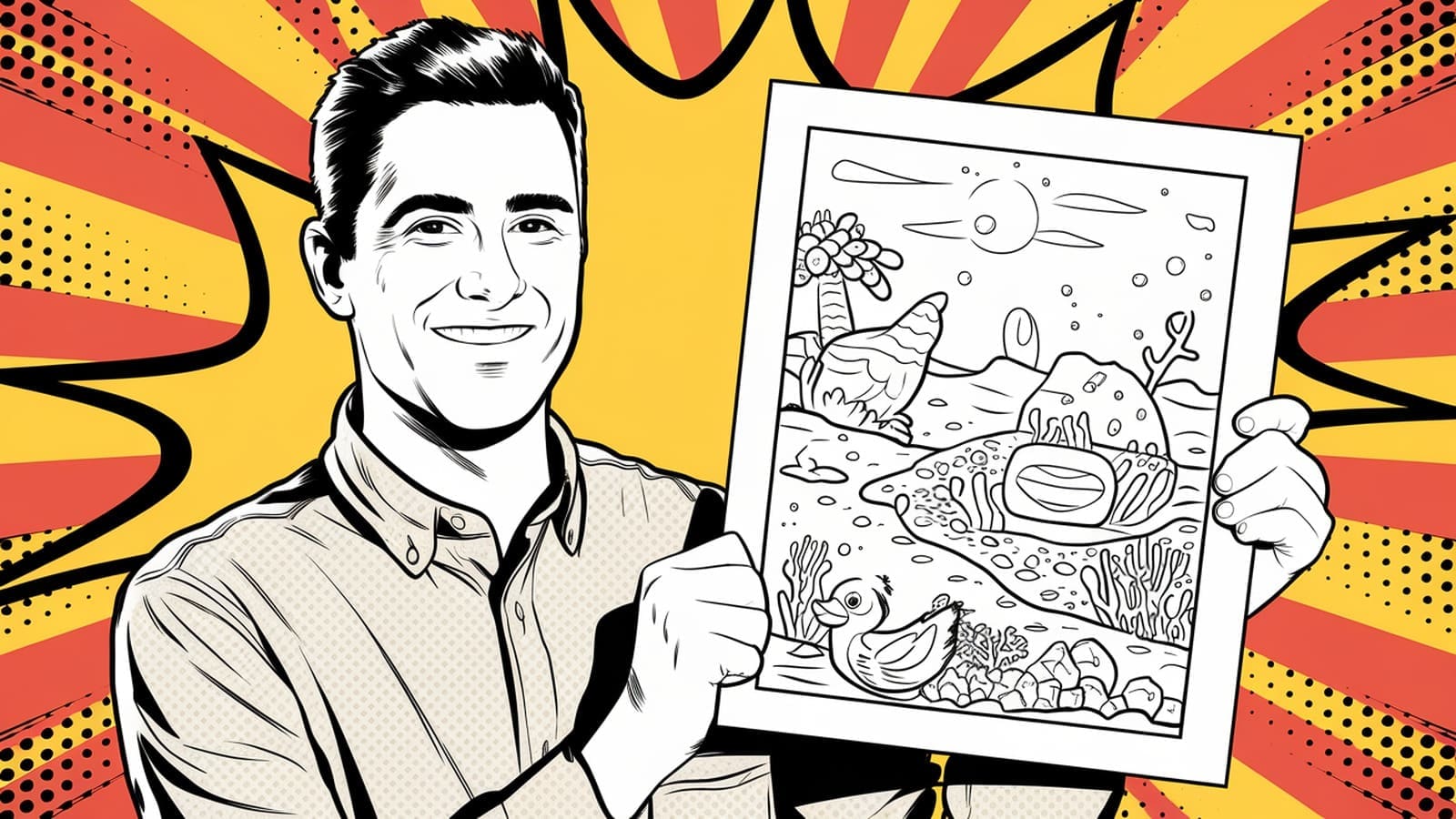
There’s a teapot in the coral reef.
A banana wedged in the tube sponges. A high-top sneaker sitting on the sand next to a starfish, and a rubber duck tucked up against the mast of a sunken ship. None of it belongs there, which is exactly why a kid will keep hunting long before a single crayon comes out.
Find & Color activity pages are a solid KDP and Etsy seller, and the usual approach is to hide a mushroom in a forest or a seashell on a beach. Fine. Except when you ask a model to hide a mushroom in a woodland scene, it draws you a mushroom, right out in the open, because mushrooms live in woods. Nothing about it reads as hidden.
So I flipped it. Hide things that have no business being there.
The contrast does two jobs at once. It’s funnier for the kid, and it gives the model an actual reason to tuck the object into the scenery instead of parking it out in open space.
Three prompts below. You get a puzzle page, a legend strip and an answer key, all of it inside your image generator with nothing to assemble by hand. I ran the whole chain on GPT Image 2 this morning.
Here’s What You’re Building
Prompt 1 draws the scene and reserves an empty white band at the bottom of the page.
Prompt 2 fills that band with the “FIND THESE!” legend.
Prompt 3 goes back to Prompt 1’s output and circles the answers in red.
Prompt 1. That band at the bottom is empty on purpose, and the empty space is the whole reason this chain works.
That reserved band is the part that matters, and it’s the thing I got wrong the first time around. Image editing models work in place. They will not push your artwork up or shrink it down to make room for something new, so if your scene runs edge to edge there is nowhere for a legend to go and you’ll get your image handed back essentially untouched. Leave the room up front and the editing pass drops right into it.
Prompt 1 — The Scene
Fresh generation, nothing attached, ratio set to 3:4.
Prompt 1 — the scene
Black and white coloring-book line art. Sunken shipwreck coral reef
scene, drawn completely straight.

Compose the page in two zones. The upper 80% is the illustration. The
bottom 20% is a completely empty white band, separated from the
illustration by one clean straight black horizontal line running the
full width of the page. Leave that band entirely blank - no drawing,
no text, nothing at all. The illustration must not cross the line.

Scene: a broken wooden shipwreck tilted on the sea floor, surrounded
by tall waving kelp and branching coral. A large sea turtle swims
across the foreground, a smiling octopus sits beside the wreck, a
shark cruises past in the upper water, and a jellyfish drifts near
the surface. Small tropical fish, a seahorse, rising bubbles, tube
sponges, a starfish and a sand dollar fill out the reef.

Hidden in the illustration, drawn with the exact same seriousness as
everything else, are 6 things that have no business being there: a
rubber duck, a frosted donut, a teapot, a high-top sneaker, a wind-up
alarm clock, and a banana.

Line work: solid black outlines, even weight throughout, every shape
fully closed. Pure outline on white with all interiors left white for
coloring. No gray, no hatching, no shading, no gradient, no texture.

The misfits: draw each one complete and unbroken, roughly the size of
one of the small tropical fish. Tuck them behind, under, or
overlapping the kelp, coral and wreckage so each one is partly
interrupted. Same line weight as everything else - no outline, glow,
or highlight setting them apart. They should look like they were
always there.

Detail density: ages 9 and up - dense intricate detail and tight
hiding places.

No text anywhere in the image: no title, caption, label, letter,
number, watermark, signature, or border frame.

Format: vertical portrait, 3:4.
“Drawn completely straight” is doing real work in there (drop that line and it starts drawing you a cartoon). You want the scene played sincerely, because the joke only lands if everything around the rubber duck is taking itself seriously.
Prompt 2 — The Legend
Attach the Prompt 1 image and switch to editing mode.
Prompt 2 — the legend
Work only inside the empty white band at the bottom of this image,
below the horizontal line.

In that band, draw 6 small icons in one evenly spaced row: a rubber
duck, a frosted donut, a teapot, a high-top sneaker, a wind-up alarm
clock, and a banana. Same black outline style and even line weight as
the drawing above, sized to fit inside the band, with clear white
space between each icon.

Centered above the row but still inside the band, add the words
FIND THESE! in bold hand-lettered block capitals.

Do not alter, redraw, or move anything above the horizontal line. Do
not label the individual icons. Add no numbers, captions, or page
numbers.
Prompt 2. One short line of lettering in a reserved space, and it came back clean.
FIND THESE! landed in clean block caps straight away. One short line of text in a reserved space is a very different ask than lettering competing with a dense illustration, and it shows.
Prompt 3 — The Answer Key, and Read This Part Twice
Attach your Prompt 1 output. Not Prompt 2’s. This is the one place the chain will bite you.
Prompt 3 — the answer key
Draw a thin clean red circle around each of these six objects in the
illustration, and only these: the rubber duck, the frosted donut, the
teapot, the high-top sneaker, the wind-up alarm clock, and the banana.

Circles in the same line weight as the drawing, unfilled, sized just
slightly larger than each object.

Do not circle anything else. The shark, the jellyfish, the seahorse,
the sea turtle, the octopus, the tropical fish, the starfish, the sand
dollar, the coral, the kelp and the shipwreck all belong in this scene
and must stay uncircled.

Change nothing else in the image. Add the word ANSWERS in block
capitals in the top left corner as the only new text.
Prompt 3, run against the Prompt 1 output. Six red circles, six correct objects, and none of the sea life ringed by mistake.
Feed it the finished page with the legend already on it instead, and it circles the six icons down in the legend strip rather than the six objects up in the scene. That’s what happened on my run, and it makes a certain amount of sense once you look at it from the model’s side. You asked it to circle six specific objects, and those six objects are sitting right there in a tidy row, clearly separated and easy to ring. That’s the path of least resistance and it took it. On that same run it also quietly ignored the instruction to make the circles red, which is usually a decent sign a model has wandered off script somewhere.
Go back to the clean scene and it lands.
Name the misfits individually in this prompt, and name what belongs as well. “Circle the hidden objects” means very little to a model that has no concept of which things you consider out of place — an earlier version of this circled the shark, the jellyfish and the seahorse, all of which live there.
Your answer page keeps the empty white band at the bottom. Leave it, or run Prompt 2 on it as well if you want the two pages to match.
Before You Upload It Anywhere
3:4 gives you 768×1024, which is close to 8.5×11 but not the same shape, so plan on padding it out for KDP rather than letting Amazon crop into your line work. Print activity interiors on one side only unless you enjoy bleed-through complaints (you don’t). And count your objects every time, because ask for six and you’ll sometimes get five or eight.
If AI drew it, that’s AI-generated content when you set the book up, not AI-assisted. Worth being straight about.
Where I Do This Work
I run a lot of my creative work through OpenArt AI, and all three pages here came out of it on GPT Image 2 without hopping between tools for the editing passes.
I’m on their Wonder plan. That may be more than you need — I’m generating at volume most days for a variety of business efforts, and it’s a business line item, not a hobby expense. If you’re picking a tier, don’t shop on credits. Commercial use rights start at Plus, so keep in mind Starter is cheaper and won’t cover you on anything you intend to sell.
Swap the brackets and this runs on any theme you want. All three passes, same order.
Template — prompt 1, the scene
Black and white coloring-book line art. [THEME] scene, drawn
completely straight.

Compose the page in two zones. The upper 80% is the illustration. The
bottom 20% is a completely empty white band, separated from the
illustration by one clean straight black horizontal line running the
full width of the page. Leave that band entirely blank - no drawing,
no text, nothing at all. The illustration must not cross the line.

Scene: [SETTING + 2 to 4 focal characters or objects]

Hidden in the illustration, drawn with the exact same seriousness as
everything else, are [N] things that have no business being there:
[MISFIT LIST].

Line work: solid black outlines, even weight throughout, every shape
fully closed. Pure outline on white with all interiors left white for
coloring. No gray, no hatching, no shading, no gradient, no texture.

The misfits: draw each one complete and unbroken, roughly the size of
[SIZE ANCHOR]. Tuck them behind, under, or overlapping the scenery so
each one is partly interrupted. Same line weight as everything else -
no outline, glow, or highlight setting them apart. They should look
like they were always there.

Detail density: [AGE BAND] - ages 3 to 5 large simple shapes with
wide open interiors, 6 to 8 moderate detail with one clear focal
subject, 9 and up dense and tight.

No text anywhere in the image: no title, caption, label, letter,
number, watermark, signature, or border frame.

Format: vertical portrait, 3:4.
Template — prompt 2, the legend
Work only inside the empty white band at the bottom of this image,
below the horizontal line.

In that band, draw [N] small icons in one evenly spaced row:
[MISFIT LIST - exactly the same items, in the same order, as prompt 1].
Same black outline style and even line weight as the drawing above,
sized to fit inside the band, with clear white space between each icon.

Centered above the row but still inside the band, add the words
[HEADER TEXT - FIND THESE! / SPOT THE ODD ONES / CAN YOU FIND THEM?]
in bold hand-lettered block capitals.

Do not alter, redraw, or move anything above the horizontal line. Do
not label the individual icons. Add no numbers, captions, or page
numbers.
Keep your [MISFIT LIST] identical between prompt 1 and prompt 2. If the legend and the scene disagree on even one object, your buyer finds five things and then writes you a review about it.
Template — prompt 3, the answer key
Draw a thin clean red circle around each of these [N] objects in the
illustration, and only these: [MISFIT LIST - same items as prompt 1].

Circles in the same line weight as the drawing, unfilled, sized just
slightly larger than each object.

Do not circle anything else. [NAME EVERY NATIVE ITEM IN YOUR SCENE -
each character, creature, plant and prop that genuinely belongs to
the theme] all belong in this scene and must stay uncircled.

Change nothing else in the image. Add the word ANSWERS in block
capitals in the top left corner as the only new text.
And again, because it’s the one that gets people: prompt 3 attaches your prompt 1 output. Filling in that native-items bracket properly is what keeps the circles off your turtles.
Misfit sets to steal. Dragon’s lair — rubber duck, traffic cone, single sock, teabag, garden gnome, roller skate. Victorian tea party — skateboard, pizza slice, scuba flipper, traffic light, basketball, paper airplane. Haunted library — beach ball, blender, tennis racket, watering can, flip-flop, birthday cake.
Pick a theme your buyers already search for, then pick six things that would get someone fired for leaving them there. That’s the whole game.
Shane is an entrepreneur with numerous companies in both the brick and mortar and tech space. He currently focuses heavily on helping other entrepreneurs grow their brands with content and courses.
Facebook
Twitter
LinkedIn
Looking To Grow Your Brand?
Don’t go bland trying to grow your brand. Check out the amazing content boosting assets I have to help you gain the notoriety your deserve!